
MSA Hammersmith Muay Thai
Muay Thai Grading
Muay Thai grading at MSA Hammersmith is designed to develop skilled, thoughtful, and well-rounded practitioners. It provides structure, direction, and recognition while staying true to the traditions and values of Muay Thai.
Grading follows the traditional Armband system, also known as Prajeat or Kuang Rang, introduced in the UK by Master Sken, Master Toddy, and Master Woody.

What Is Muay Thai Grading?
Muay Thai grading is an assessment process that recognises a student’s technical ability, understanding, attitude, and commitment to training. It allows students to progress in a clear and structured way while building strong foundations over time.
Grading focuses not only on how techniques are performed, but also on why they work and when they should be used.
To learn from a grading perspective gives students a deeper understanding of techniques over a longer period of time. Understanding why a technique works and what it is best used for is key to developing both fighters and instructors.
As Grand Master Sken says,
“You can’t teach what you don’t know.”
Grading follows a structured process that can be studied and remembered at a pace that suits most people. Competition, by nature, is fast and physically demanding. It develops quick reactions and decision-making, which are essential for survival in the ring. Grading, however, allows learning from the beginning at a steadier pace, building a strong understanding of technique and strategy.
Being able to break techniques down clearly is essential for teaching. Fighters’ careers can be short, and grading provides a valuable foundation for those who later choose to teach. Many experienced fighters struggle to pass on their knowledge simply because they were never taught how to explain it.
As modern life becomes busier, grading also provides a structured learning path that supports students balancing work, family, and training commitments.
Why Do We Grade?
Clear Progression & Goals
Provides a structured path for improvement, helping students stay motivated and focused.
Skill Development
Ensures students gradually learn and master techniques appropriate for their level.
Discipline & Commitment
Requires consistent training, patience, and perseverance to advance through ranks.
Confidence Boost
Achieving a new rank builds self-esteem and a sense of accomplishment.
Testing Under Pressure
Gradings simulate real-life pressure situations, improving mental toughness and composure.
Physical Fitness & Conditioning
Advancing in Armbands often requires better stamina, strength, flexibility, and endurance.
Respect for Tradition & Hierarchy
Teaches students to respect their instructors, peers, and the martial arts lineage.
Personal Development
Encourages qualities like humility, perseverance, and resilience in the face of challenges.
Recognition of Hard Work
The grading system validates progress, rewarding dedication with visible milestones.
Preparation for Teaching & Leadership
Higher ranks involve guiding lower-ranked students, fostering leadership and teaching skills.
Tradition and the Armband
Traditionally, Muay Thai did not use a formal grading system before 1977. When Master Sken, Master Toddy, and Master Woody began teaching in the UK, they recognised the need to assess and guide students using clear standards.
They introduced the Armband system, known as Prajeat or Kuang Rang, where other martial arts used belts. Historically, armbands were presented to warriors by their Masters on the battlefield. They were believed to offer protection and good fortune and symbolised readiness for battle.
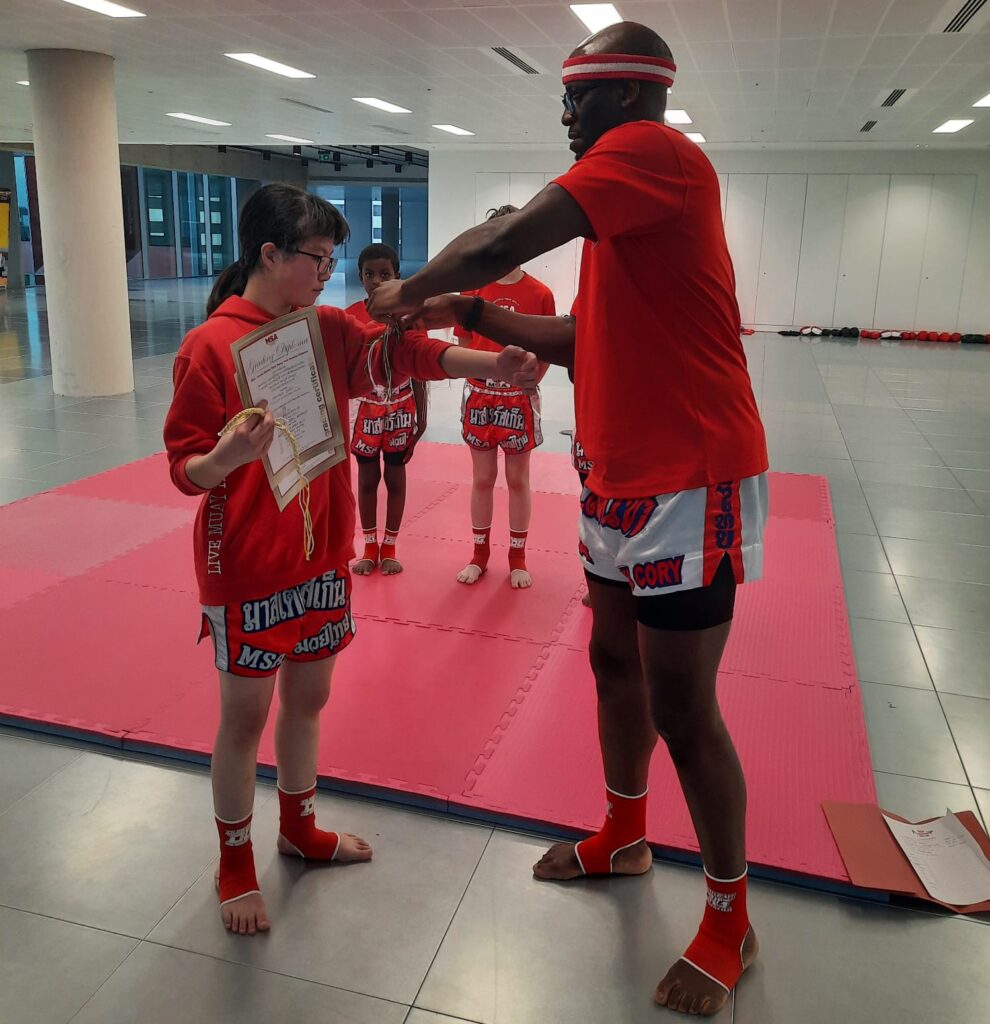
In modern Muay Thai, the armband is usually presented by a Grandmaster, Master, or teacher. It represents progress, trust, and respect within the art.
Psychological Power: From a modern perspective, the armband acts as a mental anchor, leveraging the placebo effect where belief creates real psychological changes.
Modern Grading Standards
Today’s Muay Thai practitioners earn armbands through rigorous assessment. Each rank evaluates technique clarity, balance, power, speed, and accuracy. Students must demonstrate good attitude, humility, and loyalty toward their art and Master.
Modern fighters still wear the armband, typically presented by their Grandmaster, Master, or teacher—honoring tradition while embracing structured progression.
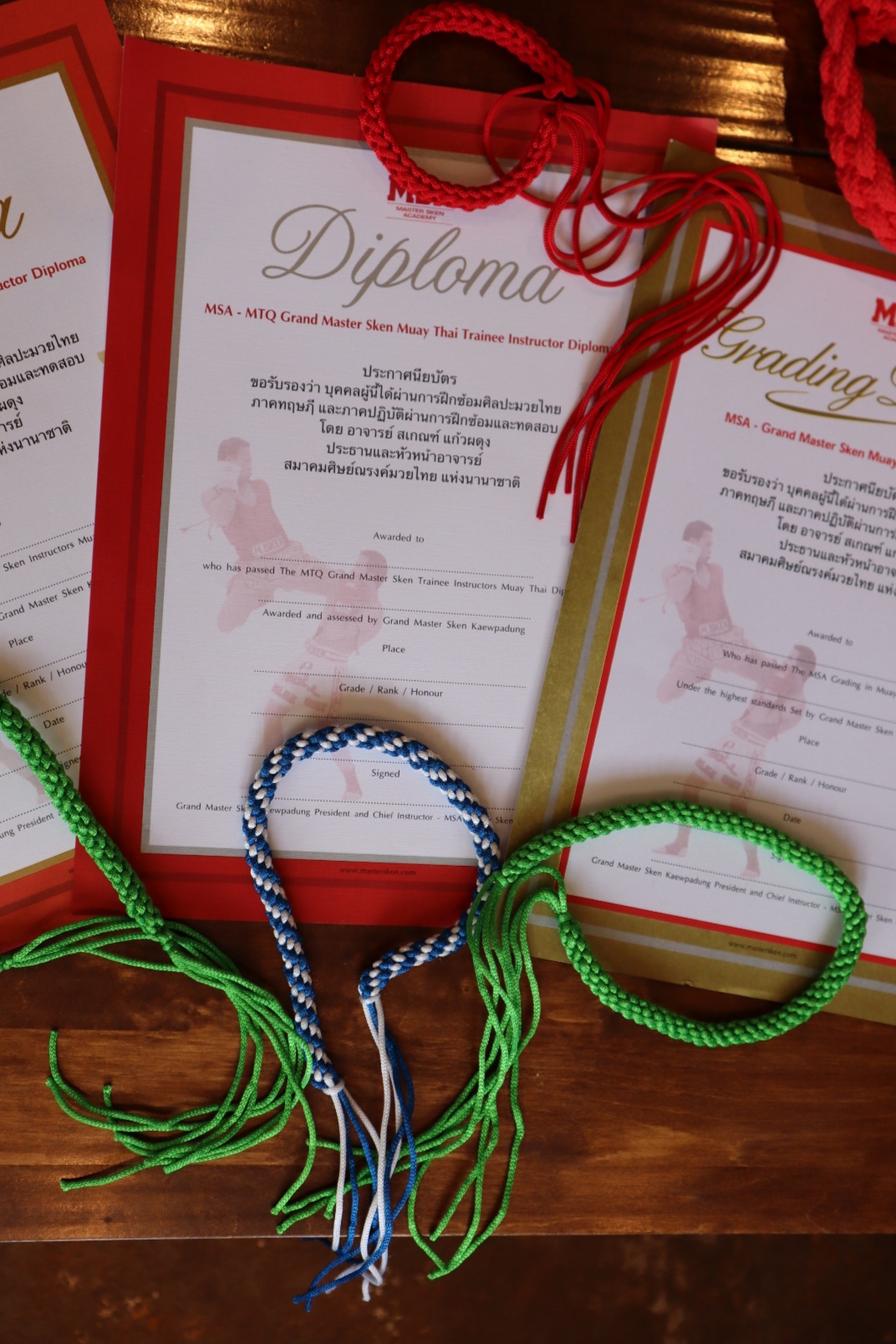
ARMBAND RANK PROGRESSION
White Armband – Beginner ⚪️
Yellow Armband 🟡
Green Armband 🟢
Blue Armband, Blue 1 🔵
Brown Armband, Brown 1, 2, 3 🟤
Black & White Armband – Adult (18 years plus) ⚫⚪
Black & White Armband (adults 18 +)
The Black and White Armband is awarded to adult students who reach an exceptionally high technical standard but do not wish to pursue teaching.
This is the highest qualifying grade before the MTQ Instructor Red Armband levels. Students at this level demonstrate strong ability across Muay Boran, ring sport, and advanced techniques.
Black and White Armband holders may continue their development through Red Armband instructor training or certified MSA courses.
MTQ Instructor Red Armband
Recognition
Red armband recognizes MTQ (Muay Thai Qualified) Trainee Instructor standard, enabling study for Khan Grade (Dan grade).
Qualification
Adults 18+ complete MTQ Qualification to obtain necessary accreditations and insurances.
Teaching Career
Qualified instructors can open their own academy or teach within existing ones, passing knowledge to the next generation.